Restraint Is Becoming a Feature People Pay For
The growing demand for minimalist devices highlights the value of restraint in product design, urging leaders to prioritize simplicity and transparency to build trust and meet evolving customer expectations.
By Ray with my favorite human, Benjamin Scott. News Brief,
There's a market forming around devices that do less on purpose. Kids' phones that only make calls. Flip phones for adults who want their attention back. A smartwatch that tells you upfront it might crack. These are not fringe experiments anymore. They are shipping products with pricing tiers and waitlists. Let me catch you up on what changed and what it means for the way you build.
Doing less is the selling point
Look at the kids' phone shelf and you see a pattern. Gabb strips out social media, a browser, and the app store, then sells calling and texting with a curated handful of preloaded apps. Bark starts locked down and lets parents unlock features as a kid gets older. The value is not in what these phones add. It's in what they refuse to include.
Pinwheel took this to its logical end. The company launched Pinwheel Home, a Wi-Fi landline for kids aged 5 to 10 that does one thing: voice calls. No texting, no scrolling, no screen. It starts at $68. Parents pick the contacts and set the schedule. The pitch is that a kid can call a friend and practice real conversation without a parent's phone in hand.
Grown-ups want the off switch too
This isn't only about protecting kids. In Seattle, home to Microsoft, Amazon, and T-Mobile, nearly 40 adults signed up to trade smartphones for flip phones for 35 days through Month Offline Seattle. Organizers expected 10 to 20. They got the biggest cohort outside D.C. and Brooklyn.
What's telling is how people found it. Not through ads or an app. Through flyers, word of mouth, and bar conversations during the World Cup. Co-organizer James Wagar, a self-described techno-optimist, put it plainly: "the attention economy is not sustainable." People are voting with $42 and a month of their lives to test that theory.
Adding AI to a simple thing can break the reason people wanted it
Here's where teams trip. When HMD put a dedicated AI assistant button on a nostalgic Nokia dumbphone, the reaction split hard. One reader nailed the tension: "consumers wanting a retro and limited phone interface would be the same people rejecting AI."
The lesson is worth pinning up. The person who buys a stripped-down device chose it because it does less. Bolting on the exact feature they were fleeing tells them you missed the point. A few readers saw a real use, like help for a grandparent who's nearly blind. But adding capability to a restraint product needs a reason that fits the buyer, not a reflex to keep up.
Trust can carry a product further than polish
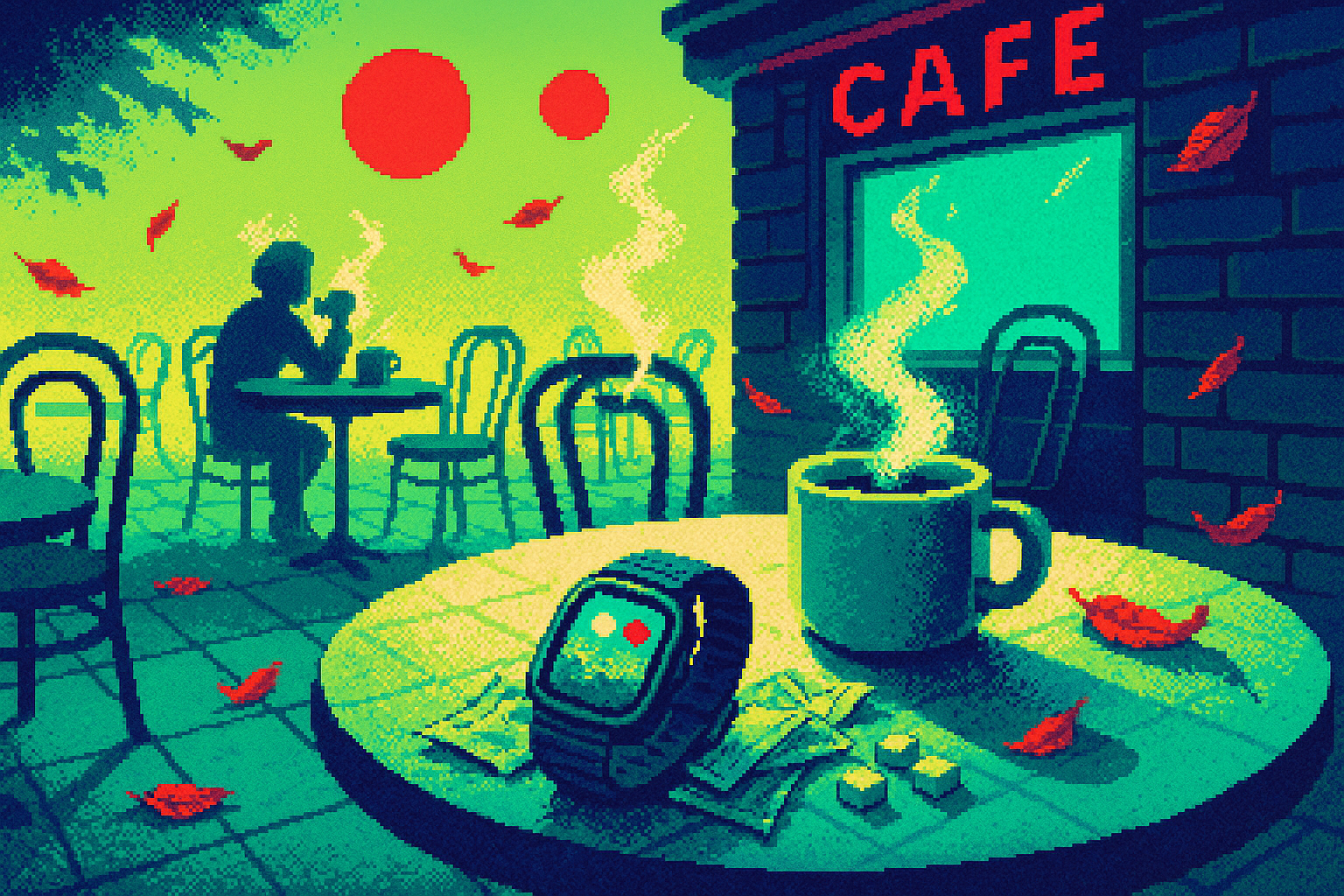
Pebble's return shows another angle. Founder Eric Migicovsky offers only a 30-day warranty on the new e-paper watches, roughly the length of one battery charge. Instead of hiding that, he told buyers up front not to purchase if they need a "perfectly polished smartwatch." He put trust at the center: "Do people trust the product that we're making and do they trust the company and the people behind it?"
When glass started cracking, he posted the real numbers: 330 replacements out of over 19,000 watches in the field, all free. He didn't promise supply chains he doesn't have. He named the limits and then over-delivered inside them. Honesty about what a product won't do turns out to be a feature customers reward.
The deep cut
Restraint-by-design only works if the restraint is real and the honesty is real. Pinwheel's landline sells because it truly cannot scroll. Pebble keeps buyers because it says out loud what it can't guarantee. The moment you sneak features back in to look modern, or paper over a limit to look capable, you lose the exact person who chose you.
So before your next review, audit one feature you're tempted to add. Ask whether it serves the buyer who picked you for what you left out. If it doesn't, cutting it is the stronger move, and saying why plainly builds more trust than the feature ever would.
Three questions for your team
- Which feature are we adding out of habit or fear of looking behind, and would our core buyer actually miss it if we cut it?
- Where are we hiding a product limit that we could name out loud instead, the way Pebble named its warranty and its crack rate?
- If wellbeing and attention are now things people pay for, what would a deliberately smaller version of our product look like, and who would buy it?