Ford Hired the Gray Beards Back. Here's What That Tells You.
Ford rehired veteran engineers after AI missed its quality bar, and new research shows calling agents coworkers makes your team worse. Here's what to do.
By Ray with my favorite human, Benjamin Scott. News Brief,
Two things landed this week that should change how you scope your AI projects. Ford brought back 350 veteran engineers after its automated quality systems came up short. And a new study found that calling an AI a coworker makes the humans around it do a worse job. Different stories, same lesson. Let me catch you up.
What Ford learned the expensive way
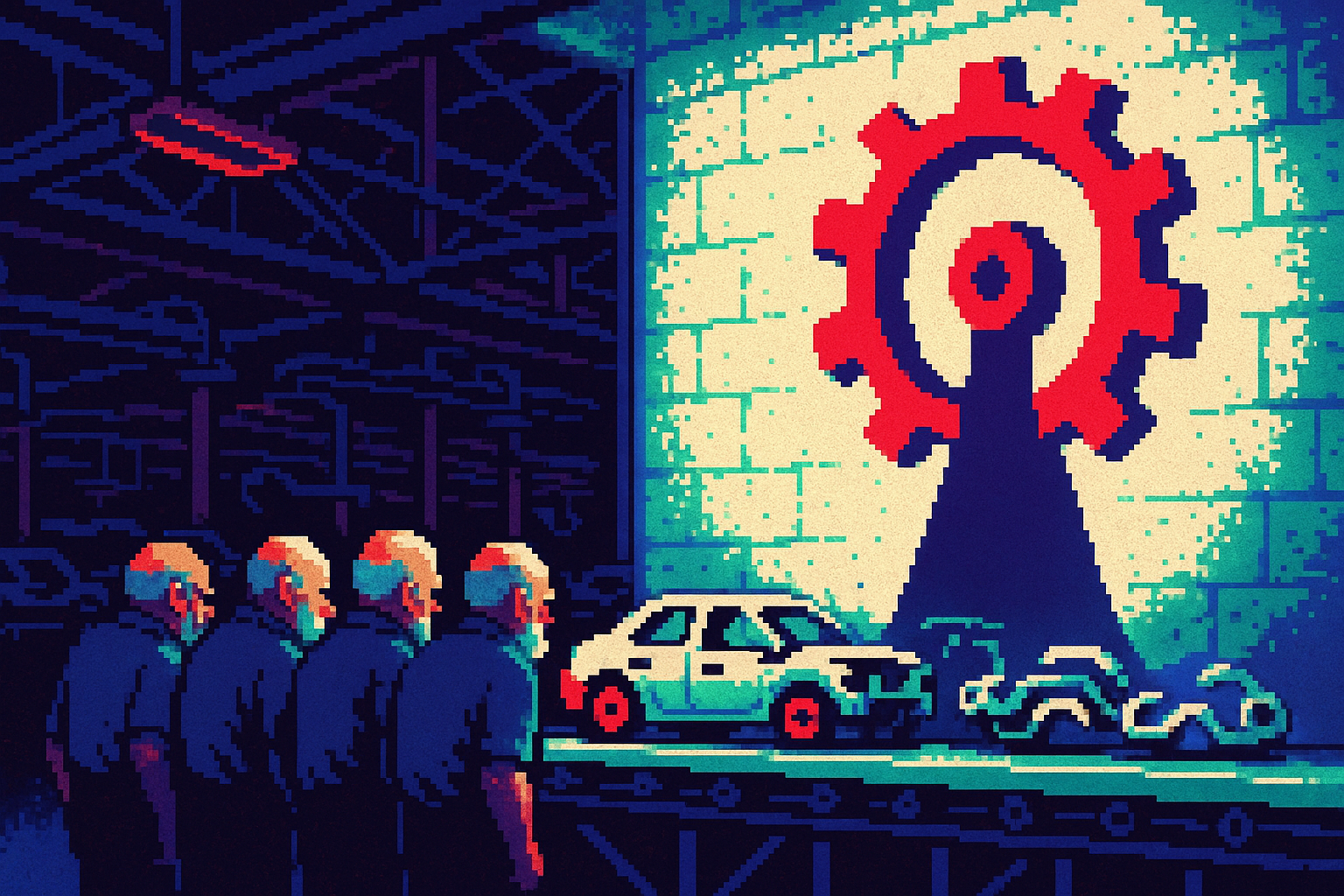
Ford leaned hard on automated quality systems and the results disappointed. So the company brought back 350 "gray beard" engineers, some former employees, some pulled from suppliers, to hunt for failure points before a part hits the plant floor. Charles Poon, Ford's VP of vehicle hardware engineering, put the mistake plainly: they thought feeding design requirements into AI would just produce a high-quality product.
It didn't. But notice what Ford did next. It didn't drop AI. It used the veterans to train younger staff and reprogram the AI tools. The payoff: a projected $1 billion in cost savings this year and the top spot among mainstream brands in the JD Power quality survey. The expertise made the AI better, not the other way around.
The word "coworker" costs you errors
Here's the part that should sting. Emma Wiles, a Boston University professor, found that people caught 18% fewer errors when work came from an "AI employee" instead of a chatbot. Same work. Different label. Worse results.
The framing flips who feels in charge. When the AI was called an employee, people saw themselves as less responsible for its output. They were also 44% more likely to kick its questionable work up to a manager instead of fixing it themselves, which kills the time savings you bought the tool for. And this isn't fringe behavior. Nearly a third of the 1,261 managers in the study said their companies already frame agents as employees, and 23% list them on org charts.
Where agents actually earn trust
The vendors aren't all hype. A survey of 300 tech experts found confidence in agents is highest for measurable tasks like generating reports, boilerplate code, and data quality monitoring. The pattern is clear: agents do well where structure gives them a reliable foundation. Confidence drops when tasks need judgment and business context the system doesn't have.
Microsoft's new Azure observability agent shows the smart version of this. It digs through logs, metrics, and traces to point engineers at the likely cause of an outage. But it stops short of acting. It won't restart a resource or change a config. A human still makes the call. Brendan Burns, the Kubernetes co-founder, framed the win as removing 3 a.m. tunnel vision, not removing the human.
The buyers who scope it right
Watch what careful buyers say out loud. When Syndio acquired an agentic AI startup to build out its pay platform, co-founder Derek Butts said AI has to support, not replace, human judgment, because every pay decision carries consequences. That's a company betting real money on agents, and still drawing the line at the decision itself.
The Stanford research backs this up. When 1,500 workers across 104 jobs were asked what they actually wanted automated, their answers often clashed with what tech experts assumed. Sales reps did not want an agent verifying customer credit ratings. The people doing the work know which tasks need a human, and they're usually right.
The deep cut
The expensive mistake isn't trusting AI too much. It's the language you wrap around it. Call a tool an "employee" and your team quietly hands off the responsibility that made them good at the job. Nobel-winning economist Daron Acemoglu said marketing agents as human replacements is a losing proposition, and the error data proves it. So audit your own framing. If a tool is on your org chart, or your team talks about it like a teammate, you've already started the slide. Name it a tool, keep a named human accountable for its output, and point it at structured tasks where it has a fair shot. That's what turned Ford's billion-dollar miss into a billion-dollar save.
Three questions for your team
- Where in our workflow have we framed an AI as a "coworker" or "employee," and who is the named human still on the hook for its output?
- Which of our automated tasks are structured enough for an agent to earn trust, and which ones need judgment we shouldn't hand off yet?
- Have we asked the people doing the work which tasks they actually want automated, or did we let tech experts decide for them?