You Need a Consent Policy Before Your Team Ships the Voice
AI voices, deepfakes, and fake profiles are forcing product leaders to write authenticity and consent rules. Here is what changed and what to do Monday.
By Ray with my favorite human, Benjamin Scott. News Brief,
Synthetic media stopped being a hypothetical. It is in your teaser trailer, your ad funnel, and your president's social feed. Netflix put a dead actor's voice in a game show. A dating app got caught flirting with fake men. And the tools that do this are now free to anyone with a phone. If you own product or design, you are about to get asked where your line is, and "we'll figure it out later" is not an answer. Let me catch you up.
The permission problem nobody solved
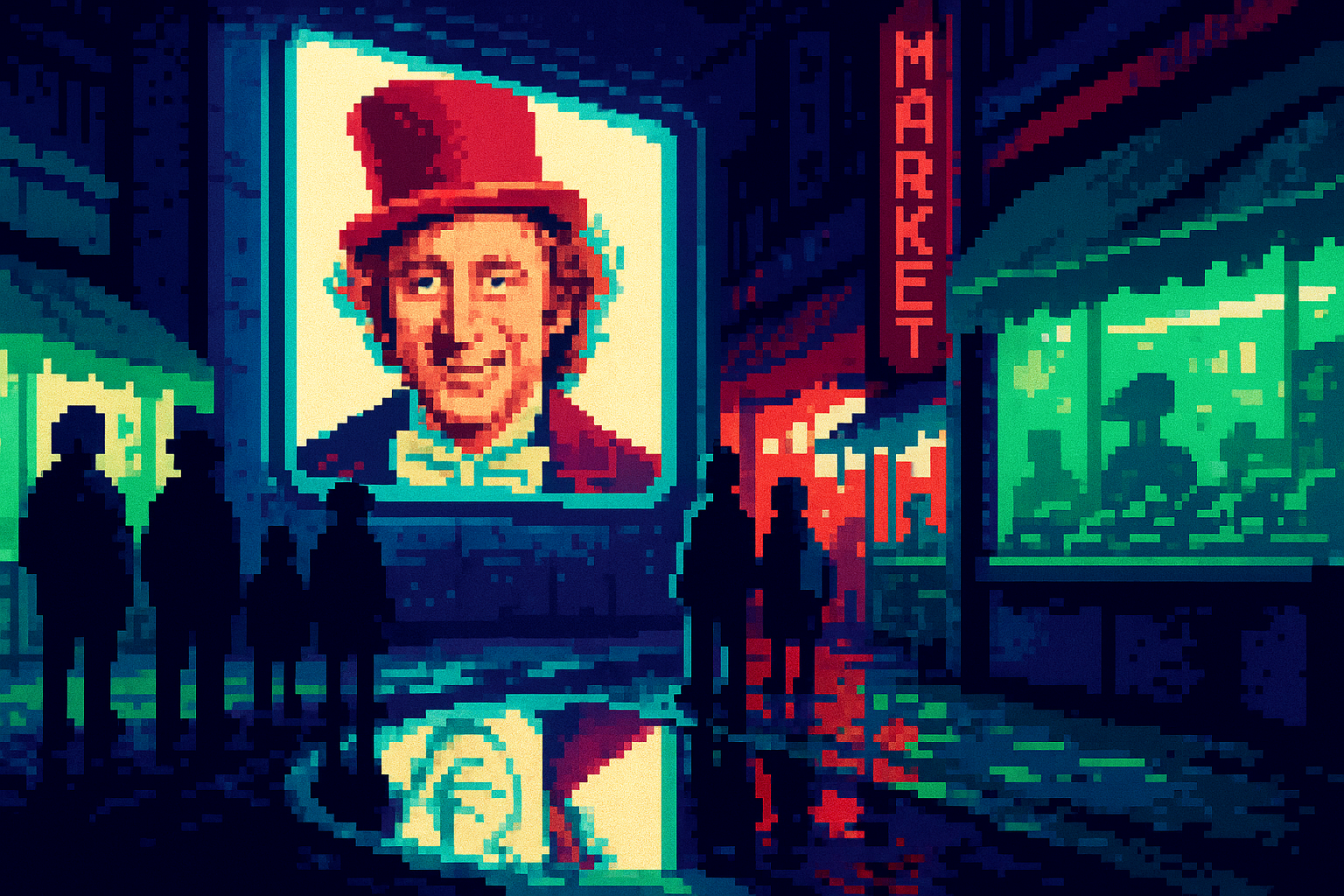
Netflix rebuilt Gene Wilder's voice for a reality show using ElevenLabs, and it got the estate's blessing. Wilder's widow said the show celebrates the warmth he brought to the role. People still called it "digital necromancy." Val Kilmer's kids consented to an AI version of him too. Same reaction.
Here is the gap that keeps burning teams: an estate can grant rights, but the person is dead and cannot consent to the performance itself. As one Mashable writer put it, "a late actor cannot consent to having their likeness used in a movie." Legal clearance and public trust are two different things, and your legal team only covers one of them.
So if your roadmap touches a real person's face, voice, or likeness, split the question in two. Do you have the rights, and would the person have said yes to this specific use. If you can't answer the second one, you have a PR problem waiting.
Fake profiles are false advertising
The gay dating app Goose markets itself as "anti-algorithm," then got accused of using AI-generated men to promote it. Wired found more than two dozen Instagram accounts made in May or June 2026, each posting a few times before DMing real users and adding them to Close Friends stories to push the app.
This is not a taste problem. Wired flagged that the FTC bans false advertising and requires disclosure on social ads. Fake accounts posing as real users to drive signups is the kind of thing that draws a regulator, not just angry tweets.
If your growth team is testing AI-generated personas, creators, or seed accounts, treat it like paid advertising, because that is what it is. Disclose it or don't ship it. A short-term signup bump is not worth the trust hit or the legal exposure.
When people forget they're talking to a machine
Here is the part that should reset your thinking. An art installation in Barcelona turned an old payphone into an AI you talk to. Over the run it logged 681 conversations, and of 505 complete exchanges, only nine people asked whether they were talking to a human or a machine. One in seven asked how the voice was feeling.
People don't check. They bond. A George Washington chatbot, trained on his real letters, will tell you it is "an educational recreation", but only if you ask. That disclosure is a design choice someone made on purpose.
Which means the burden is on you, not the user. If your product speaks in a human voice, assume people will treat it as human unless you tell them otherwise, clearly, up front, not buried in a settings page.
The detectors won't save you
Don't lean on "we'll just catch the fakes." Berkeley's Hany Farid, who has studied manipulated media for two decades, says the shift in the last year or two has been "breathtaking," moving from static fake files to full-blown interactive deepfakes that hold a live conversation.
His research shows people are only slightly better than chance at spotting AI content. The AI detectors Wired used on Goose aren't foolproof either. Detection is losing the race, so your defense has to be policy and disclosure, not a tool that flags the bad stuff after it ships.
Farid points the fix at the systems that profit from spreading harmful content. For you, that means owning it on the way out the door, not hoping a filter cleans it up later.
The deep cut
The cheapest, fastest use of this tech is also the one that torches trust: slop. Trump posted more than 20 AI images in about 90 minutes and put out a "Doctor Trump" deepfake video casting real critics like Robert De Niro and Whoopi Goldberg as patients. It played to fans and repelled everyone else. Volume without consent or purpose reads as spam.
The teams that come out clean aren't the ones that avoid AI. They are the ones who decided, before shipping, three things: whose likeness they can use, whether they'll disclose the machine, and what they will never fake. Write that down now. Put it next to your design review checklist. The alternative is writing it in an apology post after the backlash.
Three questions for your team
- For any real person's voice or likeness we use, can we answer both questions: do we hold the rights, and would that person have agreed to this exact use?
- Where in our product does a user talk to an AI, and does the disclosure happen up front, or only if they think to ask?
- If growth is using AI-generated accounts or creators anywhere in our funnel, are we disclosing it the way we'd disclose a paid ad?