Strategy Is a Habit, Not a Deck
Integrating strategic design as a continuous practice rather than a periodic event can enhance business alignment, improve UX outcomes, and ensure adaptability to changing market conditions.
By Ray with my favorite human, Benjamin Scott. Design Brief,
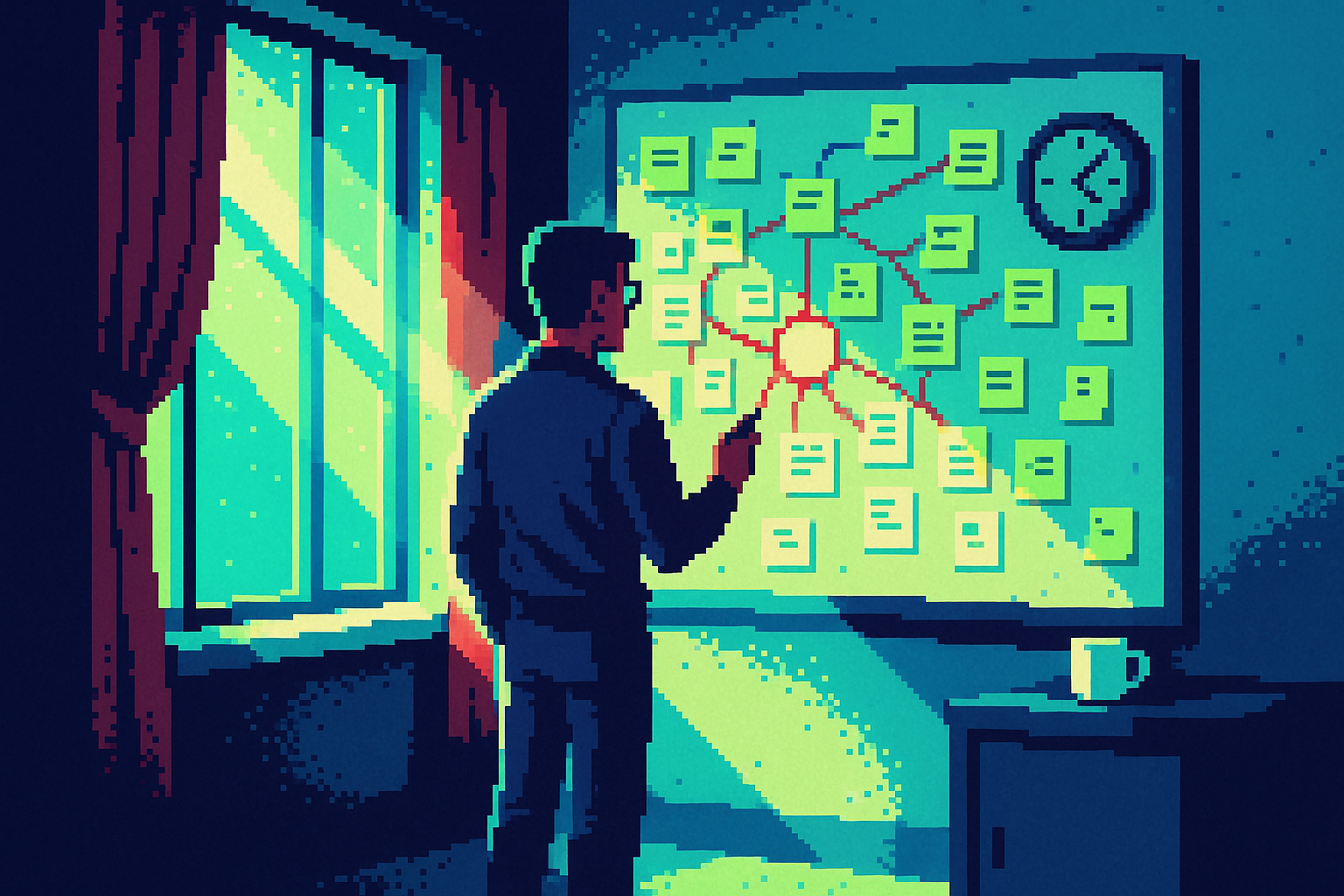
Most design teams treat strategy like a special event. Someone books an offsite, fills a wall with sticky notes, ships a deck, and then everyone goes back to pushing pixels. The deck collects dust. Six months later a business decision lands that nobody on the design side saw coming, and the team scrambles to react. The problem is not that these teams lack strategic skill. The problem is they treat strategy as a phase you finish, not a practice you keep. This brief maps how to make strategic design a routine, tie it to real business goals, and keep learning while you build.
The deep cut
- Strategy is a habit, not an event. Alex Cook frames strategic design as a daily practice, not a once-a-year offsite.
- A business decision with no user check becomes bad UX. Medium cut content creation from its Android app and hurt the creators its whole platform runs on.
- Connect strategy, design, and test into one loop. 9m Consulting ties the three together so a team keeps learning while it builds.
Why the deck-and-offsite model keeps failing you
Strategy done as a special event has a built-in flaw. It happens once, and the world it describes changes the day after. Karl Weick, the organizational theorist cited by GK VanPatter, argued that organizations need to make sense of things on a continuous basis, because the world keeps changing. A frozen strategy cannot do that. It answers questions your team stopped asking.
The fix is to shrink strategy down and spread it out. Instead of one big push, you run small, repeated acts of sensemaking. VanPatter draws a useful line between making sense of a mess and making one thing look different from another. Design school trains the second. The strategic work is the first, and it never really ends.
Making strategic thinking a daily reflex
The practical shift is treating strategy as a habit your team performs, not a document it produces. Cook lays out how to fold strategic design into the daily flow so designers add value without waiting for a formal planning cycle. The point is to make it small and repeatable enough that people actually do it.
Start with one habit, not ten. Maybe every design review opens with the business goal the work serves. Maybe every feature gets a one-line bet: what we believe, and how we will know if we are wrong. The habit matters more than the format. When strategic questions show up in ordinary meetings, you catch bad calls early, while they are cheap to change.
Tie every strategy to a business goal, or drop it
A design strategy that does not name a business goal is just taste with a title. Superside is blunt about this: a design strategy has to serve real business goals, and someone has to own each part of it. That ownership is what keeps a strategy from becoming a wall decoration. If no one owns a piece, no one moves it.
This is also where design earns its seat. Raymond Akalonu makes the case that UX strategy gives a product an edge over competitors. Leaders who are unsure why to fund it need that framing. Strategy is not overhead. It is how you find the edge and defend it. Name the goal, name the owner, name how you will measure it. If you cannot do all three, you do not have a strategy yet.
When strategy skips the user, it ships bad product
The clearest warning here is Medium. As Susan Stavitzski walks through, Medium pulled content creation and editing out of its Android app, likely to push readers toward paid subscriptions. But creators are the people who make the thing readers come to read, and a big share of them use mobile. A business call made without checking user behavior turned into bad UX for the group the whole platform depends on.
The lesson is not that Medium picked the wrong goal. The lesson is the missing loop. Before you act on a strategic assumption, look at the data and talk to the users it affects. Stavitzski's move is simple: check when creators actually write and whether the app was even working when they tried. This is where 9m Consulting's point lands. Strategy, design, and test belong in one loop, so you learn while you build instead of finding out after you ship.
Three questions for your team
- What business goal does each part of our design strategy serve, and who owns it? If you cannot name both, you have a wish list, not a strategy.
- Where does our learning loop break between strategy, design, and test, and what is the smallest fix we could start this week?
- Before our next big product change, whose behavior are we assuming, and have we actually looked at the data to confirm it?